
Menu
Mixing Function with Style: Decorative Concrete in Kent Basements
Decorative Concrete Kent
In Kent area homes, basement areas provide great opportunities to increase living space; however, typical basement concrete flooring is usually cold, feels industrial, and creates an undesirable ambiance. Decorative concrete can turn a utilitarian space into an inviting space that enhances your property’s value, while also meeting the needs of the moisture and durability issues associated with Pacific Northwest basement environments.
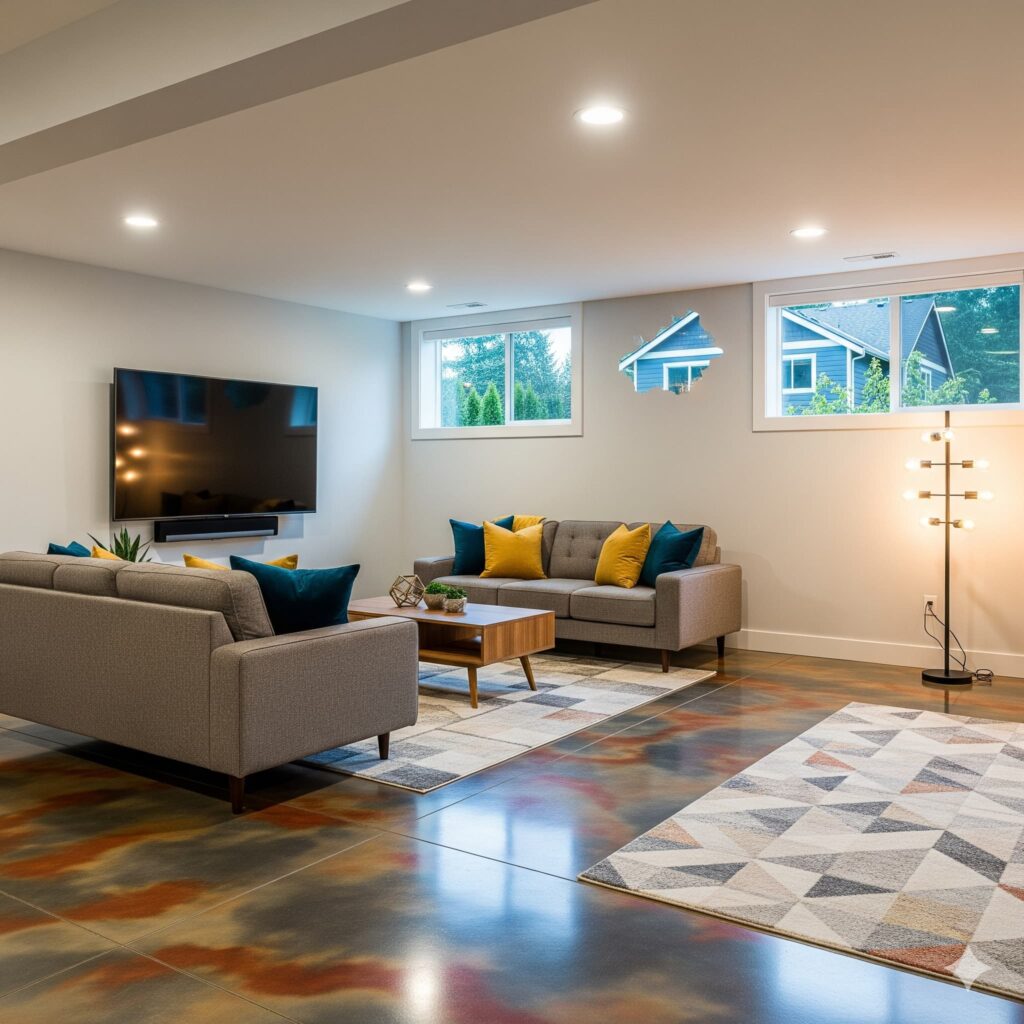
Basement-Specific Advantages of Decorative Concrete
Basement-specific advantages of decorative concrete are more relevant to the specific characteristics of Kent’s basements—such as managing moisture, moderating temperature extremes, and meeting higher durability expectations—than are many alternative flooring options. Additionally, the inherent moisture resistance and thermal mass characteristics of decorative concrete make it an ideal choice for below-grade applications.
Moisture management becomes especially important in Kent’s wet climate, where moisture in the basement environment (and the occasional flood) can damage most traditional flooring materials. Decorative concrete presents smooth, seamless surfaces that are resistant to moisture-related damage, and cleaning up minor water incursions in the event they occur is relatively simple.
The thermal mass characteristics of decorative concrete also reduce temperature extremes in basement spaces typical of Pacific Northwest homes by naturally regulating temperatures. As a result, decorative concrete helps to lower heating bills and provide a comfortable environment for extended periods of time in basement spaces.
Durability requirements for basement spaces are generally higher than those required for primary living areas due to the greater amount of storage space, workshop space, and flooding risk associated with basement spaces. In addition, decorative concrete will easily endure heavy use and retain its attractive appearance, thereby validating the basement area investments made by owners.
Decorative Concrete Options Commonly Used in Basement Spaces
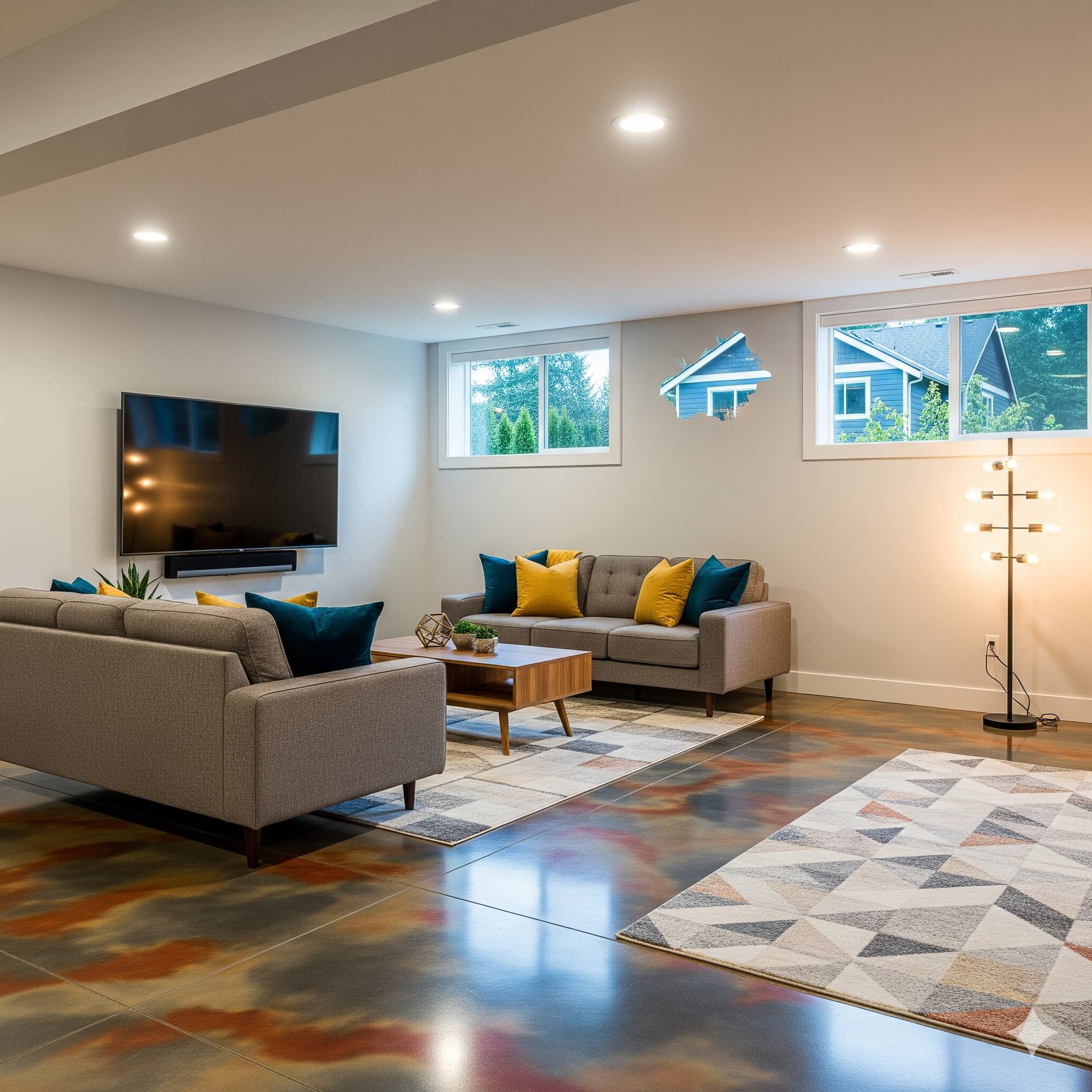
Acid staining offers numerous color options and provides a rich, variegated color scheme that complements Kent’s natural aesthetic preference and hides minor defects in basement flooring surfaces that are typical in existing basement floors. Acid staining is especially suitable for homes near the Green River Natural Resource Area, which have naturalistic themes.
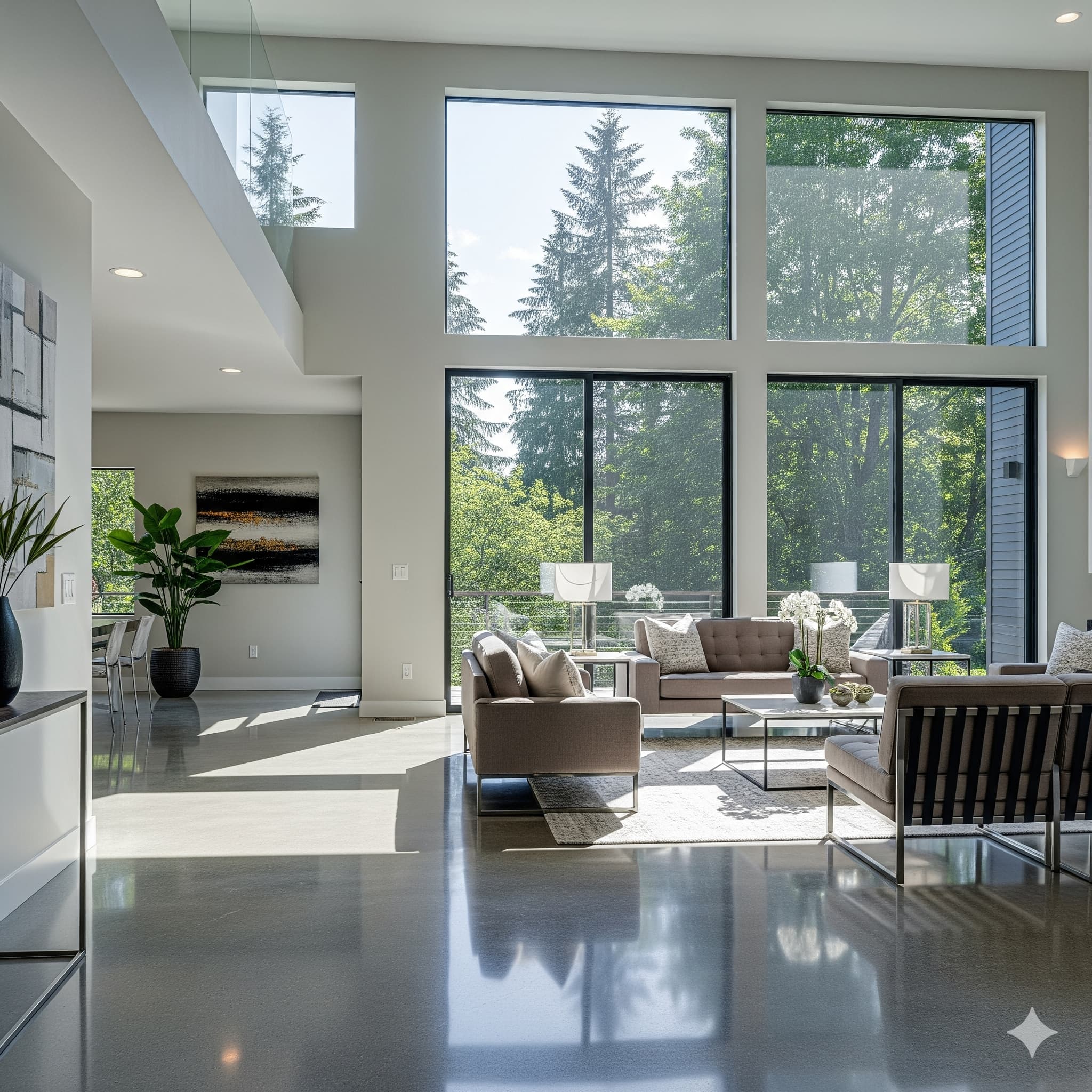
Polished concrete presents a high-end, contemporary look that bounces light around the basement space, making it appear lighter. Polished concrete would be well-suited for modern homes in Kent and would be easy to clean and maintain while providing an upscale appearance that will increase the value of the home.
Decorative overlays enable dramatic changes to existing basement floors through the application of a very thin layer of specialty material that will create a new stone, tile, or custom textured finish. These types of systems are ideal for older Kent homes and their surrounding neighborhoods (e.g., Kent Commons), where renovation budgets are typically constrained.
Epoxy-based coatings that contain decorative flake or metallic effects offer durable, attractive finishes that are resistant to stains and moisture while producing unique visual effects. Epoxy-based coatings containing decorative flake or metallic effects are suitable for both residential and workshop applications common in Kent’s diverse housing stock.
Design Factors for Kent Basements
Lighting coordination is necessary for displaying decorative concrete in basement spaces where there is limited natural light. Reflective polished surfaces will reflect available light, and proper fixture placement will highlight decorative elements and textures.
When choosing a color scheme, consideration should be given to the limited natural light and the tendency of basement spaces to create feelings of enclosure. Lighter colors and warmer tone selections will help to counteract the cave-like feel and fit within Kent’s architectural style and regional aesthetic preferences.
Choices regarding patterns and textures will impact both the aesthetic appeal and safety of basement spaces. Smooth textures will provide sufficient slip resistance while still providing a sophisticated appearance, which is especially important for areas that occasionally receive moisture.
Integration with the existing basement components—including support columns, utility areas, and stairways leading to the basement—requires thoughtful planning that integrates rather than conflicts with these functional aspects.
Strategies for Moisture Control
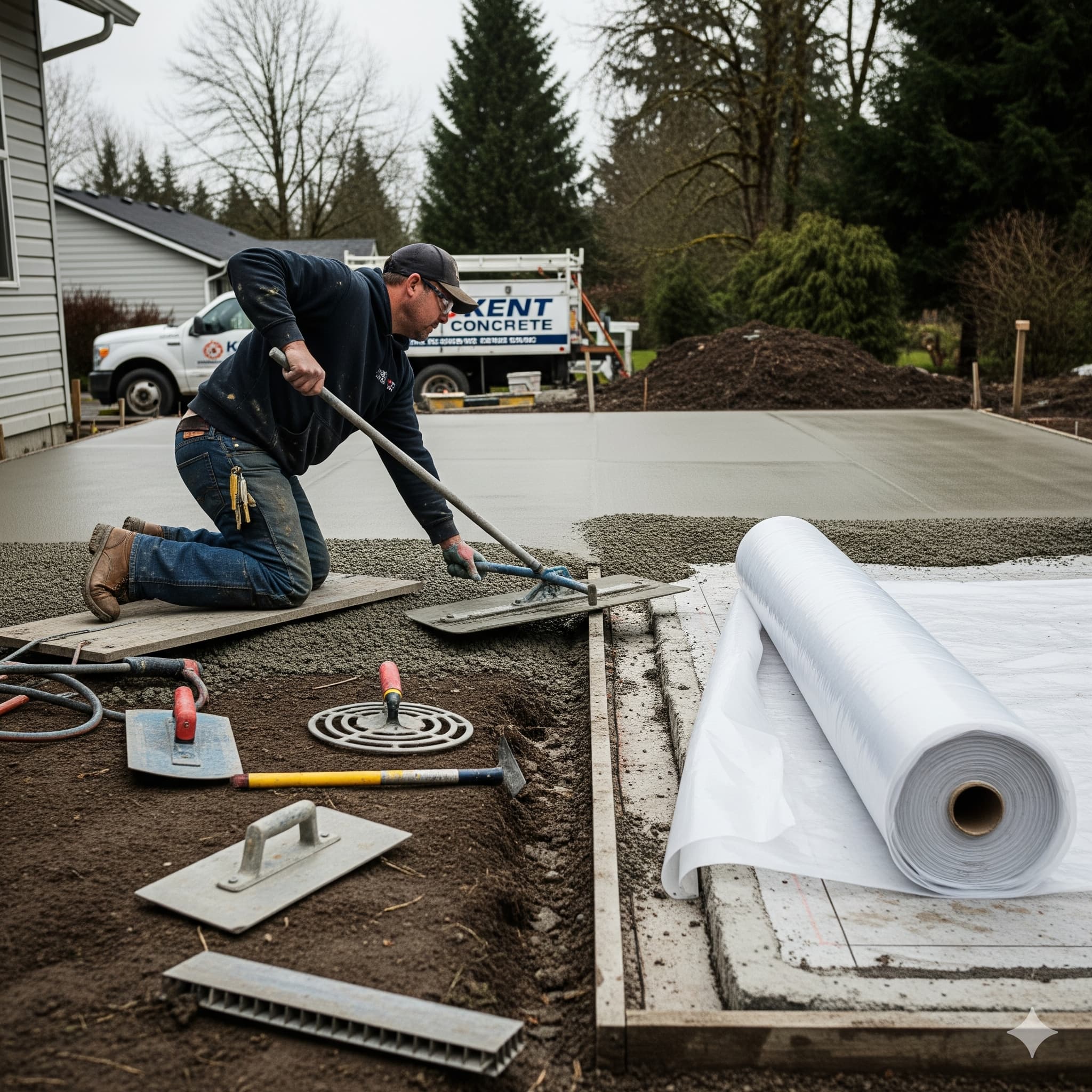
Properly installed vapor barriers below decorative concrete will prevent moisture migration from below while still permitting the use of surface treatments that enhance the appearance without affecting the performance of the decorative concrete.
Drainage integration involves subtle slope design and drain coordination that will manage water incursion while maintaining an attractive appearance. Drainage features can be incorporated into basement floors that will protect against flooding while maintaining decorative treatments.
Active humidity control through proper ventilation and dehumidification will promote decorative concrete performance while promoting comfortable basement environments. Active humidity control is necessary in Kent’s humid climate to achieve optimal long-term results.
Waterproofing integration will coordinate decorative concrete with wall waterproofing systems and foundation drainage to provide complete moisture protection. Professional designers will ensure that all systems work together effectively to provide maximum protection.
Process and Scheduling for Installation
Requirements for preparing the surface before installing decorative concrete in basement spaces often involve repairing existing cracks, leveling the surface, and determining if moisture is present before the project scope and timeline are finalized. Proper surface preparation will produce long-term performance and appearance.
Consideration for curing decorative concrete in basement environments accounts for reduced ventilation and temperature variability that will affect decorative concrete performance. Professional installers will include environmental controls to ensure optimal curing conditions.
Seasonality has less effect on basement project schedules than it does for exterior work; however, scheduling installation to coincide with heating and cooling system and plumbing work will ensure optimal installation conditions and avoid interference with other trade professionals.
Obtaining access to basement spaces for installation purposes is often difficult and time-consuming compared to installing at grade; therefore, the installation process requires careful planning for delivering materials, placing equipment, and removing debris from the residential basement access points.
Cost Analysis and Value Considerations
Installed decorative concrete material costs vary depending on the type and color of decorative concrete chosen, but costs typically range from $8 to $15 per square foot, which compares favorably to quality carpet, tile, or luxury vinyl flooring options while providing superior durability and moisture resistance for basement applications.
Increased installation difficulty in basement spaces often increases installation costs due to increased access difficulties, increased moisture preparation requirements, and increased coordination of the existing utilities and structural elements common in below-grade spaces.
Long-term value includes reduced replacement costs, minimal maintenance requirements, and increased marketability of the home resulting from using decorative concrete when compared to traditional basement flooring options.
Energy efficiencies provided by improved thermal mass characteristics and reduced heating costs will likely offset initial costs while providing continued operational cost savings for Kent homeowners.
Specific Decorative Concrete Applications for Kent Homes
Entertainment areas will benefit from the durability and ease of maintenance offered by decorative concrete while offering attractive surfaces that will facilitate furniture placement and activity areas. Polished concrete is particularly suitable for this purpose.
Workshop and office areas will benefit from the professional appearance and practical durability of decorative concrete while remaining resistant to damage caused by equipment, chairs, and occasional spills common in these spaces.
Areas intended for exercise and recreation will benefit from durable, low-maintenance flooring options that will withstand the heavy use expected while providing comfort and safety. Decorative concrete with suitable textures and cushioning considerations will provide optimal environments for this type of activity.
Storage areas will benefit from decorative concrete surfaces that are seamless and easy to clean while being resistant to damage and retaining an attractive appearance. Minor decorative treatments can transform utilitarian storage spaces into organized, pleasant environments.
Maintenance and Longevity
Cleaning decorative concrete in basement spaces remains minimal and typically consists of periodic sweeping and occasional mopping with neutral cleaning agents. Seamless decorative concrete surfaces resist dust buildup while facilitating maintenance routines.
Applying protective treatments such as sealers and waxes to decorative concrete surfaces will preserve the appearance of the decorative concrete and provide additional moisture protection and stain resistance. Ongoing maintenance by trained personnel will ensure optimal performance over the lifetime of the decorative concrete.
Minor damage or wear to decorative concrete surfaces can be repaired with touch-ups using most decorative concrete systems; thus, routine maintenance of the decorative concrete’s appearance does not require extensive refinishing projects. Trained contractors will assist with maintaining optimal appearance.
The expected lifespan for properly maintained decorative concrete installations is generally 20 to 30 years, which represents excellent value relative to alternative flooring options requiring replacement every 5 to 15 years.
Coordination With Basement Systems
Properly coordinated installation of decorative concrete will ensure that the decorative concrete installation does not interfere with heating, cooling, or ventilation systems and can potentially contribute to thermal benefits that improve overall system efficiency.
Coordinating electrical services will permit the inclusion of radiant heating systems or decorative lighting elements that will add to the comfort and attractiveness of basement spaces. Professional coordination will ensure all systems function effectively.
Plumbing considerations include coordinating with floor drains, sump pumps, and potential future plumbing additions that may need to be included in the basement space during renovations or expansions.
Insulation considerations will work with decorative concrete to create comfortable and energy-efficient basement spaces that maximize the investment in decorative flooring while allowing year-round usage.
Benefits of Using a Qualified Installer
Kent Concrete Masters offers specialized knowledge and expertise in decorative concrete related to the specific challenges posed by basement spaces—namely, controlling moisture, accessing difficult-to-reach locations, and integrating decorative concrete with existing basement systems—in Pacific Northwest homes.
Quality assurance during the installation of decorative concrete will ensure that all surface preparation requirements, moisture protection requirements, and finishing techniques are completed correctly to ensure long-term performance in challenging basement environments.
Warranty coverage and ongoing technical support will protect the owner’s investment and provide resources for questions about maintenance, repairs, or future enhancements that basement spaces often require as the owner’s needs change.
Knowledge of Kent’s soil conditions, construction practices, and climatic challenges will ensure that decorative concrete installations will perform optimally and complement local architectural styles and regional aesthetic preferences.
Decorative concrete can transform Kent basements from underutilized storage spaces into aesthetically pleasing, functional living spaces that will increase the value of the home and meet the practical needs of the homeowner. Professional installation will ensure that decorative concrete installations will produce optimal results that will last for decades in Pacific Northwest basement environments.